The Rise of Micro Figures (POP BEAN): Industry Trends, Material Guide, and Custom Manufacturing Solutions
Introduction
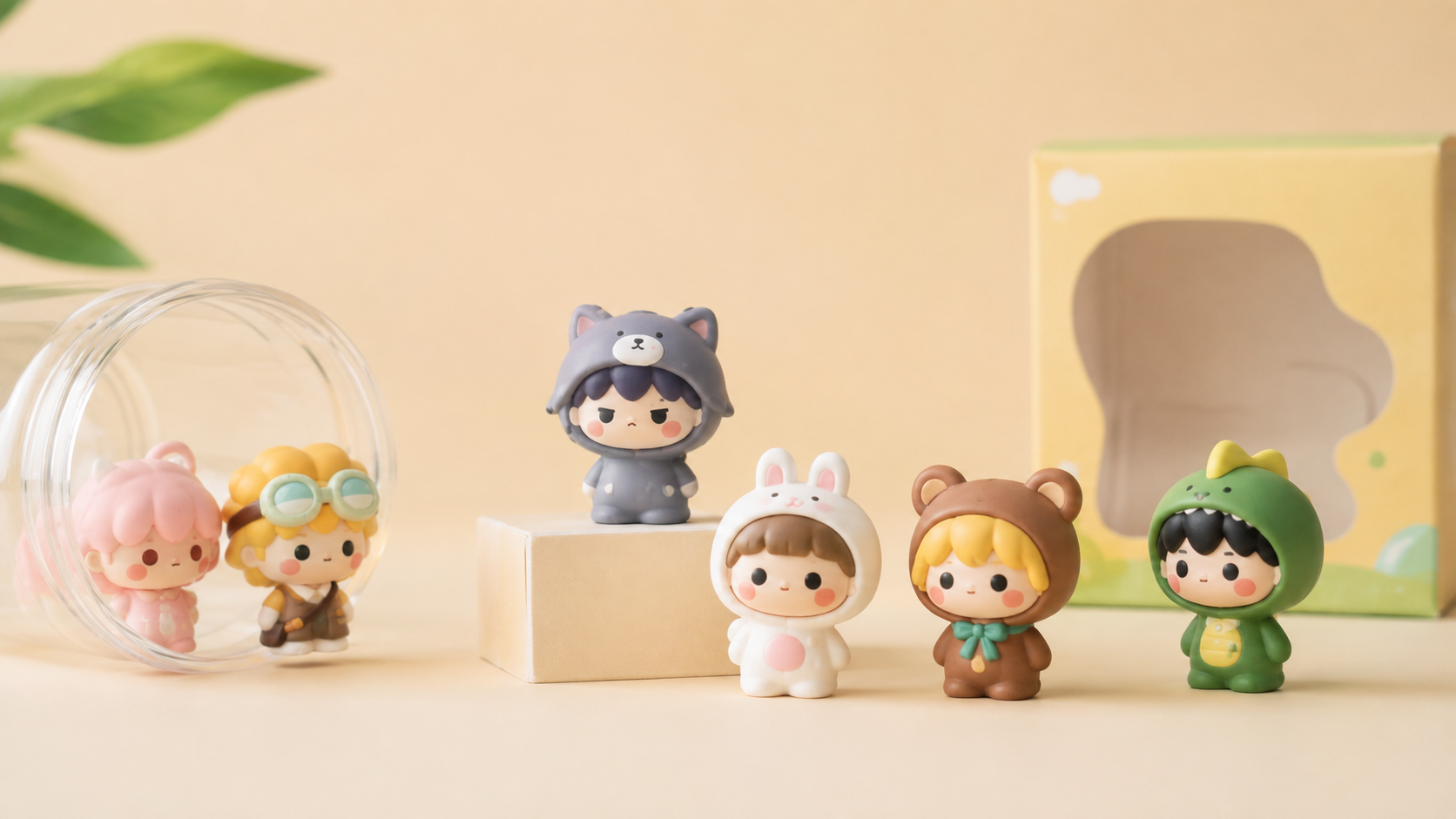
Micro figures, also known as mini figures or “POP BEAN” in some markets, are becoming an increasingly popular format for collectible toys, character merchandise, IP products, and promotional items.Typically measuring around 2–4 cm, these compact figures combine low space requirements, strong visual appeal, and flexible applications. For brands, IP owners, retailers, and merchandise companies, micro figures can provide an efficient way to develop collectible product series without the size and logistics requirements of traditional larger figures.
However, producing a successful micro figure is not simply a matter of making a smaller version of a traditional figure. At a size of only a few centimeters, material selection, mold design, detail structure, painting, assembly, and quality control all become more important.This guide explains the current opportunities around micro figures, compares the most common materials, and shows how brands can choose a suitable manufacturing approach for custom projects.
Part 1: Why Are Micro Figures Becoming Popular?
1. Collectible Product Series
One of the biggest advantages of micro figures is their suitability for collectible product lines.Because each figure requires relatively little display space, brands can create multiple characters, colors, poses, costumes, or themed variations within the same product series.This makes micro figures suitable for blind bags, collectible sets, display jars, gift boxes, and other multi-piece formats.For IP owners and merchandise companies, this also creates opportunities to build complete collections rather than relying on a single product.
2. Flexible Applications
Micro figures are not limited to desktop decoration.
Depending on the design and hardware configuration, they can be developed into keychains, bag charms, shoe charms, phone accessories, fridge magnets, ornaments, promotional merchandise, and other customized products.This flexibility allows the same character or IP design to be adapted into different merchandise categories.For brands looking to build a merchandise ecosystem around their IP, this can be an important advantage.
3. Efficient Storage and Shipping
Small products can also provide logistical advantages.
Micro figures generally require less storage space and can achieve higher packing density than larger collectible figures.For international B2B buyers, distributors, and e-commerce sellers, product dimensions and shipping weight can have a significant impact on landed cost.This makes compact merchandise particularly attractive when a product needs to be shipped internationally or stored in large quantities.
Part 2: Choosing the Right Material for Micro Figures
Material selection is one of the most important decisions when developing custom micro figures.
The right material depends on your target quantity, product structure, surface requirements, budget, expected durability, and market positioning.For custom micro figures, PVC and PU resin are two commonly considered options, while silicone can be used for specific products that require a softer or more flexible material.
PVC: Suitable for Scalable Production
PVC is widely used in collectible toys, character merchandise, keychains, ornaments, and other mass-produced products.
Main advantages
PVC offers good durability, flexibility, and resistance to everyday impact. It is also well suited to repeat production once the production mold has been established.For medium- to high-volume projects, the initial mold investment can be distributed across a larger production quantity, making the unit economics more attractive.PVC is therefore often a practical choice for brands that plan to continue selling the same design over time.
PU Resin: Suitable for Prototypes and Limited Runs
PU resin is commonly used for prototypes, artist figures, highly detailed models, and limited-edition collectibles.One of its advantages is that silicone molds can generally be produced with lower initial tooling costs than traditional steel injection molds.This can make PU resin attractive when a brand wants to test a new character or product concept before committing to larger-scale tooling.However, silicone molds have a limited service life and are not normally the most economical solution for continuous high-volume production.
Part 3: PVC vs. PU Resin — Which One Should You Choose?
The best material is not necessarily the material with the lowest initial cost. It is the material that best matches the complete business model of the product.
Choose PVC when:
You expect medium- to high-volume production.
The same design will be produced repeatedly.
Durability and flexibility are important.
You want a more efficient unit cost at scale.
Consider PU resin when:
You need a market test.
The initial quantity is limited.
The product contains highly detailed structures.
You are developing a limited-edition or artist-style collectible.
The most effective approach is sometimes not to choose only one material throughout the entire product lifecycle.
For example, a brand can use PU resin for early-stage prototyping and market validation, then move to PVC injection molding when sales volume becomes sufficient to justify production tooling.This approach can help reduce unnecessary upfront investment while keeping a clear path toward scalable production.
Part 4: What Makes Micro Figure Manufacturing Challenging?
Producing a 2–4 cm figure creates challenges that are not always visible in the original 3D design.Small facial features, thin accessories, narrow gaps, raised textures, and tiny color areas all require careful consideration before manufacturing.A design that looks excellent on a computer screen may not always translate directly into a stable mass-production process.For this reason, design-for-manufacturing evaluation is particularly important for micro figures.Before production, manufacturers may need to review:
Minimum wall thickness
Fine protruding details
Parting lines
Draft requirements
Painting areas
Assembly structure
Attachment points and hardware
These details can determine whether a design can be produced consistently and efficiently.
Part 5: How XLVIA Supports Custom Micro Figure Projects
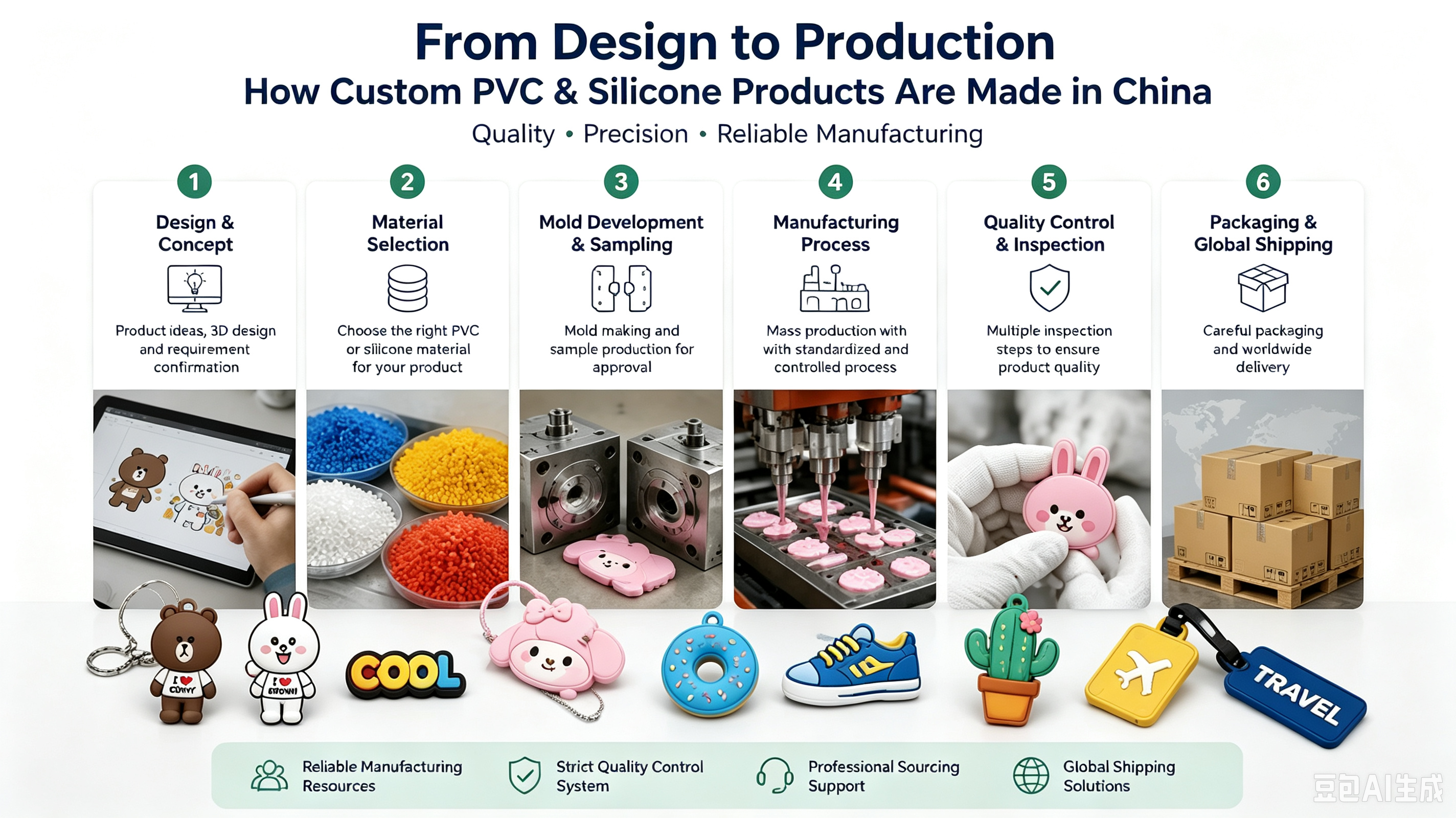
XLVIA provides OEM and ODM support for customized PVC and silicone products, with manufacturing partners across Guangdong, China-all of whom hold ISO9001 and other relevant certifications — to deliver reliable production quality for clients worldwide.For micro figure projects, our role is not simply to arrange production. We help evaluate the product concept, material, structure, production process, and packaging requirements so that the design can move toward practical manufacturing.Depending on the project requirements, the development process can include:
1. Concept and Design Review
We review the artwork or 3D concept and identify potential manufacturing issues before sampling.
2. Prototype Development
The prototype stage allows the customer to evaluate proportions, details, colors, structure, and overall appearance.
3. Material and Process Selection
Based on the target quantity and product requirements, we help determine whether PVC, PU resin, silicone, or another suitable process is more appropriate.
4. Production and Quality Control
After sample approval, the project can move into production with quality checks throughout the manufacturing process.
5. Packaging Development
Micro figures can be supplied with different packaging formats, including blind bags, display boxes, jars, and customized retail packaging, depending on the product concept.
Part 6: A Practical Development Path for New Micro Figure Projects
For a new product, the biggest mistake is often investing heavily before the market has been validated.A more controlled development path can be:
Design → Prototype → Small-Batch Test → Market Validation → Mass Production
At the early stage, the focus should be on validating the product concept, appearance, target audience, and market response.Once the product demonstrates sufficient demand, the project can be optimized for larger-scale PVC production.This approach allows brands to balance development cost, production efficiency, and market risk.
Conclusion: From Small Figures to Scalable Merchandise
Micro figures are more than simply smaller versions of traditional collectible figures.Their compact size, collectible nature, flexible applications, and efficient logistics make them an attractive format for IP merchandise, promotional products, retail collections, and customized brand projects.However, successful micro figure development requires more than a good-looking design. Material selection, mold strategy, manufacturing feasibility, finishing, packaging, and production planning all need to work together.Whether you are developing your first prototype, testing a new IP, or preparing a larger merchandise collection, choosing the right manufacturing strategy from the beginning can make the development process more efficient and predictable.
XLVIA supports customized PVC and silicone product projects through OEM and ODM services, helping brands turn product concepts into manufacturable merchandise.
Ready to Develop Your Custom Micro Figure?
Send us your artwork, 3D file, reference image, or even an initial product idea. Our team can help evaluate the material, production process, sampling approach, and manufacturing requirements for your project.
Visit XLVIA to discuss your next custom PVC or silicone project.
PVC Products Market Trends and Customization Opportunities
From Design to Production How Custom PVC & Silicone Products Are Made in China