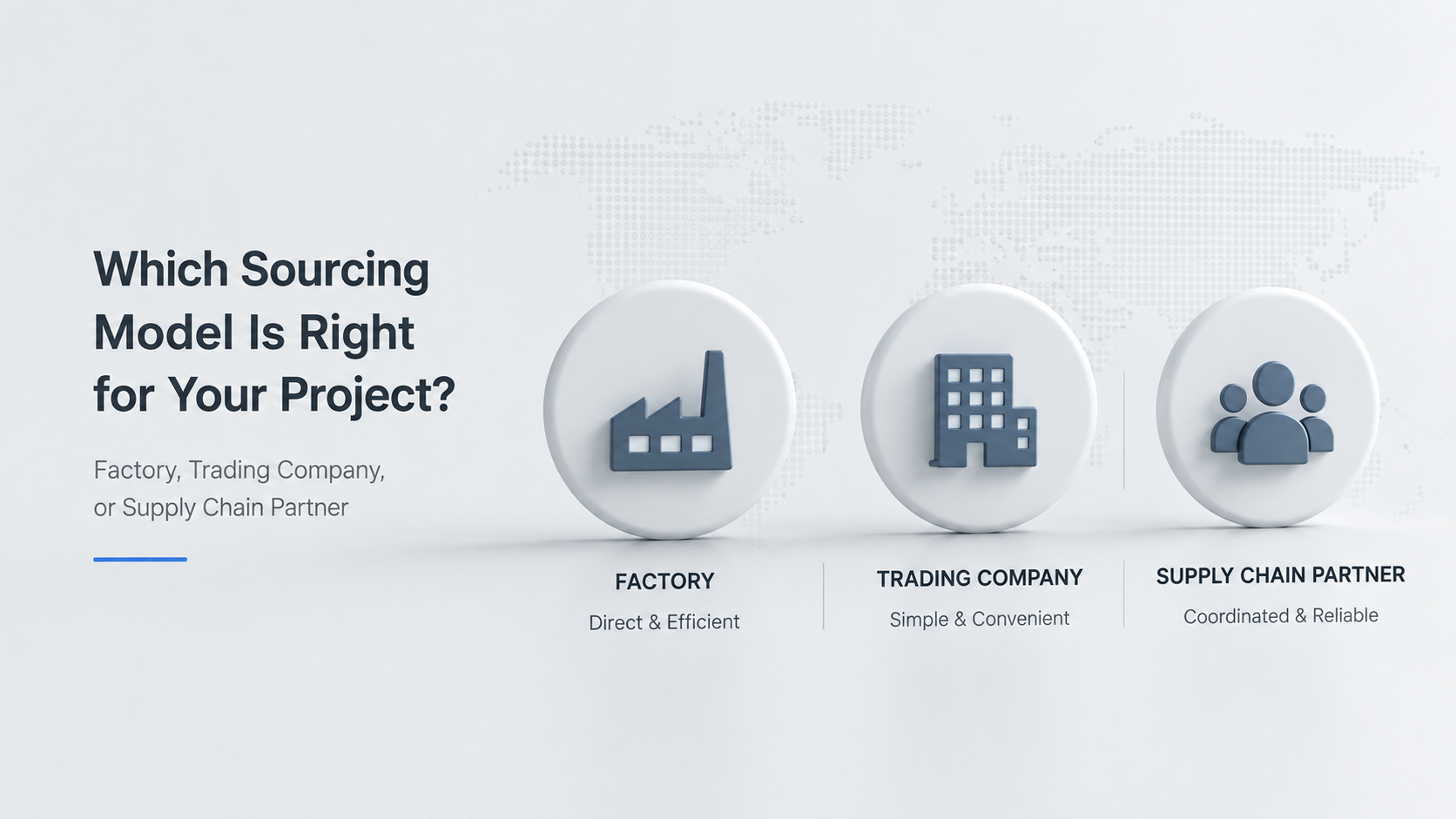
Factory, Trading Company, or Supply Chain Partner? Which One Is Right for Your PVC & Silicone Product Sourcing?
When sourcing custom PVC or silicone products from China, there are generally three ways to work: directly with a factory, through a trading company, or with a supply chain partner.All three models can get the job done, but they solve different problems. The real difference is not whether you can find a factory, but how much of the supplier selection, product development, and production management you want to handle yourself.
If you need a mature, standardized product in large volume, working directly with a specialized factory may be the most efficient option. But when a project involves multiple products, multiple suppliers, custom development, or coordination from product development to delivery, choosing the right sourcing model becomes much more important.
Direct to Factory: More Control, More Responsibility
Working directly with a factory has clear advantages. You communicate with the manufacturing side directly and have more direct access to production information. For high-volume, mature, and highly standardized products, this model can offer strong cost and efficiency advantages.However, a factory’s specialization also means that it is usually focused on specific products, materials, or manufacturing processes.One factory may be highly experienced in PVC keychains but less familiar with silicone products. Another may specialize in complex PVC figures but lack the capacity for fast, high-volume production.In other words, choosing a factory does not necessarily mean choosing the right production solution for your entire project.When a project involves multiple products or different manufacturing processes, you may need to identify, communicate with, and manage several factories at the same time. That means more work around quotations, sampling, lead times, quality control, and delivery coordination.
Finding a Factory Is Only the First Step
For buyers who are already familiar with sourcing from China, finding a supplier may not be the most difficult part.The real questions are whether the factory is truly suitable for your product, whether its production capacity matches your volume and schedule, whether it can support product development and sampling, whether its quality is consistent, and whether it can maintain reliable communication throughout mass production.These questions may not seem complicated individually, but the management effort can increase quickly when multiple suppliers are involved.Therefore, the challenge in China sourcing is not always finding a factory. It is coordinating the right production solution around the product.
Working with a Trading Company: Simpler Purchasing, Different Value
A trading company can make purchasing easier by reducing the need for overseas buyers to communicate directly with multiple factories.For buyers with clearly defined products who want a straightforward purchasing process, this model can be convenient. A trading company can act as a commercial bridge between the buyer and manufacturers, handling communication, quotations, and transaction coordination.But when a project involves multiple products, multiple suppliers, custom development, and ongoing production coordination, the question becomes more than simply, “Who can sell me this product?”
Who can help me coordinate the entire process?
This is one of the key differences between a supply chain partner and more traditional purchasing models.
Where Does a Supply Chain Partner Add Value?
The value of a supply chain partner is not simply providing a product or recommending a factory. It is about coordinating different production resources and making the sourcing process simpler, more efficient, and more manageable.For overseas buyers, this can create value in several areas.
Supplier Matching
Different products, materials, processes, and order volumes may require different types of manufacturers.A supply chain partner should match production resources based on the actual requirements of the product, rather than simply choosing a factory based on its quotation.
Product Development
Custom products are rarely as simple as sending a design file and starting production.From design adjustments and 3D modeling to material selection, sampling, and revisions, product development often requires multiple rounds of communication.A partner familiar with manufacturing can help bridge the gap between design requirements and actual production capabilities.
Production Coordination
When multiple suppliers are involved, one of the biggest costs is often not the product itself, but the communication and coordination required to manage the project.Production schedules, sample approvals, quality requirements, and delivery timelines across different suppliers all need to be followed up consistently.A single coordination point can significantly reduce the complexity of managing multiple suppliers directly.
One Point of Contact, Multiple Production Resources
This is one of the key values XLVIA aims to provide to overseas buyers.XLVIA is not limited to a single factory. Instead, we look for suitable production solutions within China's manufacturing ecosystem based on each client's product requirements.For a project involving multiple products or manufacturing processes, the client does not need to manage every factory separately.
You have one main point of contact, while we coordinate the production resources behind the scenes.This allows you to focus more on your brand, market, and sales instead of spending significant time on supplier selection, production follow-up, and communication across multiple factories.
Where XLVIA Fits In
XLVIA is a China-based sourcing and product development partner specializing in PVC, silicone, and custom merchandise.Our role is not simply to connect a client with a factory. We help identify suitable production resources based on the product requirements and coordinate the process from product development through production and delivery.Our core support includes:
Supplier Screening & Matching
Identifying suitable production resources based on product type, process, volume, and development requirements.
Product Development Support
Coordinating design, 3D modeling, materials, sampling, and product revisions.
Production Coordination & Follow-Up
Following up on production progress, lead times, and communication with suppliers.
Quality & Delivery Coordination
Helping confirm quality requirements and coordinate subsequent steps such as packaging, inspection, and logistics.Ultimately, the problem we aim to solve is not simply that a client cannot find a factory.
We aim to reduce the complexity of managing the sourcing and production process in China.
Which Model Is Right for Your Project?
There is no single sourcing model that is right for every buyer. Different models work better for different projects.
Your situation | Recommended option |
Mature, standardized products, large volumes, and you can manage the supply chain yourself | Work directly with a factory |
You want a simpler purchasing process and straightforward product sourcing | Work with a trading company |
Multiple products, multiple suppliers, custom development, and ongoing coordination are involved | Work with a supply chain partner |
For some mature, high-volume products, working directly with a factory may be the most efficient option.But as a project becomes more complex, the real challenge may no longer be “finding a factory,” but finding the right production resources and making the entire process work smoothly.
This is where XLVIA aims to create value for overseas buyers.
Conclusion: Which Model You Choose Depends on Where You Want to Spend Your Time
There is no absolute right or wrong between working directly with a factory,purchasing through a trading company, or working with a supply chain partner.What matters is which approach best fits your products, project, and ability to manage the sourcing process.If you already have an established supply chain and only need to purchase standardized products in large volumes, working directly with a factory may be the right choice.If you want to reduce the complexity of supplier selection, product development, production follow-up, and communication across multiple parties, a partner who can connect you with Chinese manufacturing resources and coordinate the production process may provide greater value.
XLVIA connects overseas buyers with China's manufacturing resources — not simply to recommend a factory, but to find a more suitable production solution for each product.
If you are developing custom PVC, silicone, or other merchandise products, feel free to share your requirements with us. We can help you make an initial assessment of product feasibility, identify suitable manufacturing resources, and discuss the sourcing approach that best fits your project.
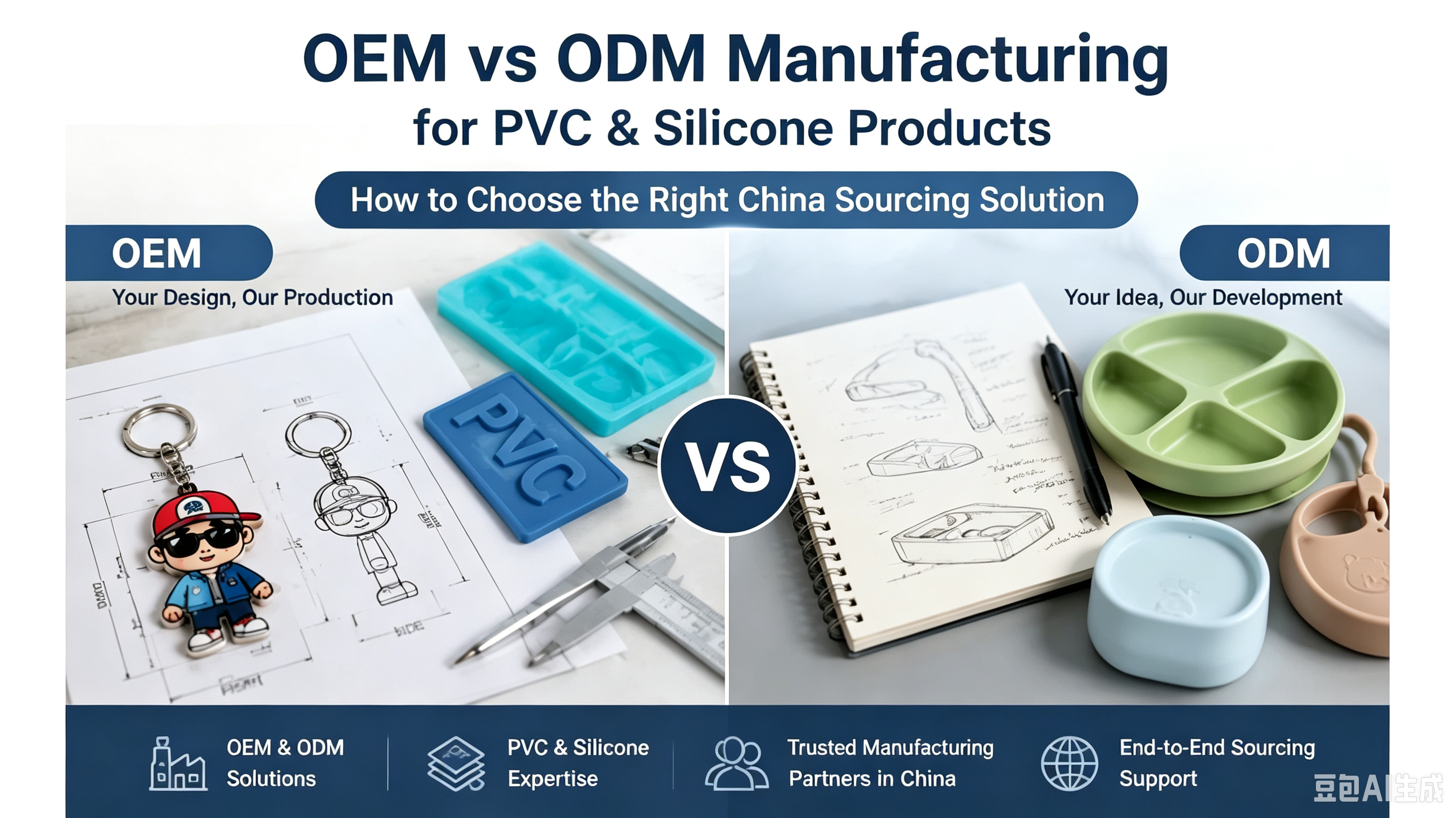
OEM vs ODM Manufacturing for PVC & Silicone Products
From Design to Production How Custom PVC & Silicone Products Are Made in China
Sometimes a Project Starts with a Beautiful but Impractical Idea—Until We Sit Down and Make It Real